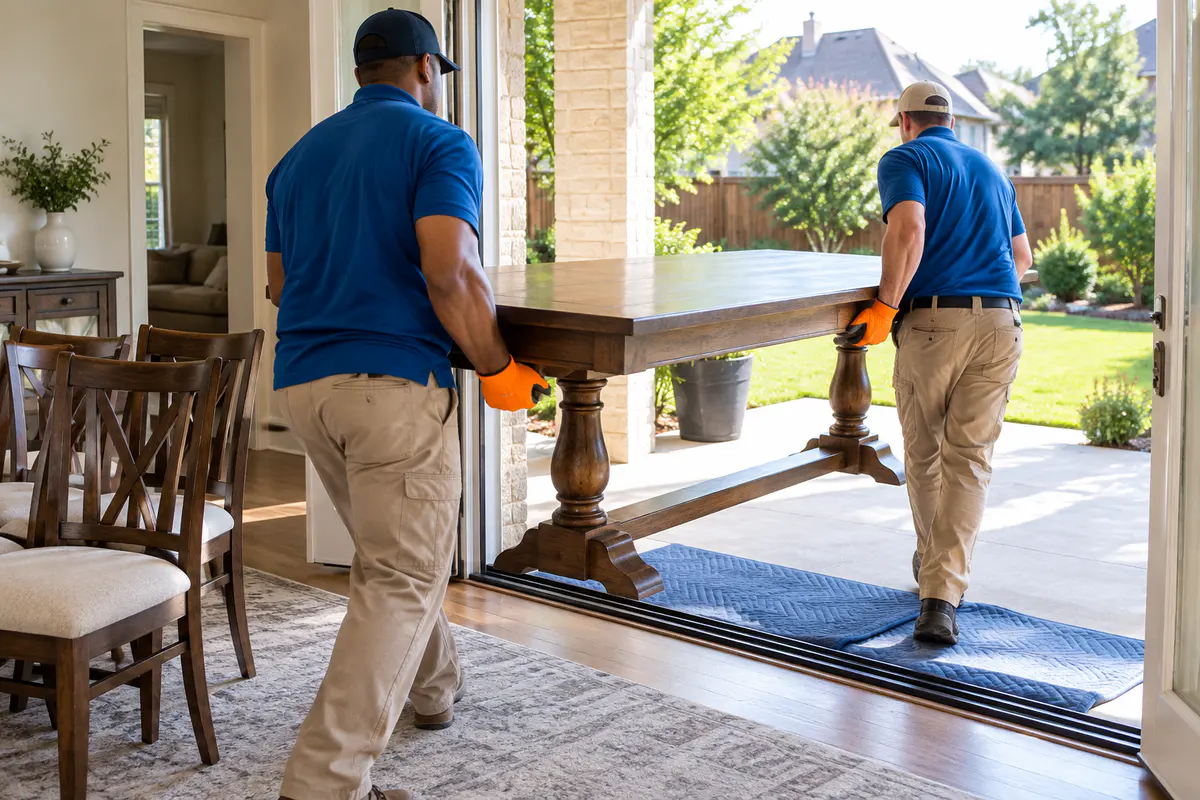
Measure the furniture and the narrowest part of its route. A sofa can fit through the front door and still fail at a hallway turn or stair landing.
Measure the piece in its carrying position
Record width, height, and depth. For a sofa, include the arms and back. For a dresser, empty every drawer and note whether drawers can be removed. For a table, check whether the legs or base detach. Measure glass separately and tell the crew if a panel is removable.
Find the narrowest point
Measure door openings between the stops, not the decorative trim. Photograph tight turns, railings, ceiling slopes, and stair landings. For elevators, record the door opening and interior depth. A diagonal route may help, but it should be assessed before lifting begins.
- Furniture width, height, and depth
- Narrowest doorway opening
- Hallway width at each turn
- Stair width, landing depth, and overhead clearance
- Elevator door and interior dimensions
- Distance from exit to loading point
- Removable legs, shelves, drawers, cushions, or glass
Do not force a questionable fit
Forcing a heavy piece can damage the furniture, walls, floors, or the person carrying it. If measurements are close, ask for an on-site assessment. Specialty pieces such as pianos, safes, mechanical beds, and large glass cabinets need separate planning.
Prepare the path
Remove rugs, pet gates, shoes, small tables, and wall decorations along the route. Keep children and animals away from the working area. Confirm where the vehicle can load without blocking a fire lane or neighboring driveway.
Call about furniture removal with the measurements and route photos ready.